
Barcelona has one of Europe’s most visible cannabis cultures. Cannabis social clubs, international events and the city’s reputation have made searches such as “weed in Barcelona”, “Barcelona weed” and “cannabis in Barcelona” increasingly common.
But Barcelona is often misunderstood.
Cannabis is not fully legal in Barcelona, Spain does not have a licensed recreational cannabis retail market, and Barcelona is not an Amsterdam-style coffeeshop destination.
At the same time, Spanish law treats personal cannabis use in genuinely private settings differently from public possession, public consumption and commercial supply.
This guide provides a broad overview of what weed in Barcelona actually means in 2026 — from laws and cannabis clubs to tourism, terminology and health considerations — with links to our more detailed guides where a subject needs deeper explanation.
Quick answer: Weed is not fully legal in Barcelona. Personal use in a genuinely private setting is treated differently from public possession or consumption, while street sales and drug trafficking remain illegal. Cannabis social clubs exist as private associations, but they are not licensed recreational dispensaries and operate in a legally complex environment.
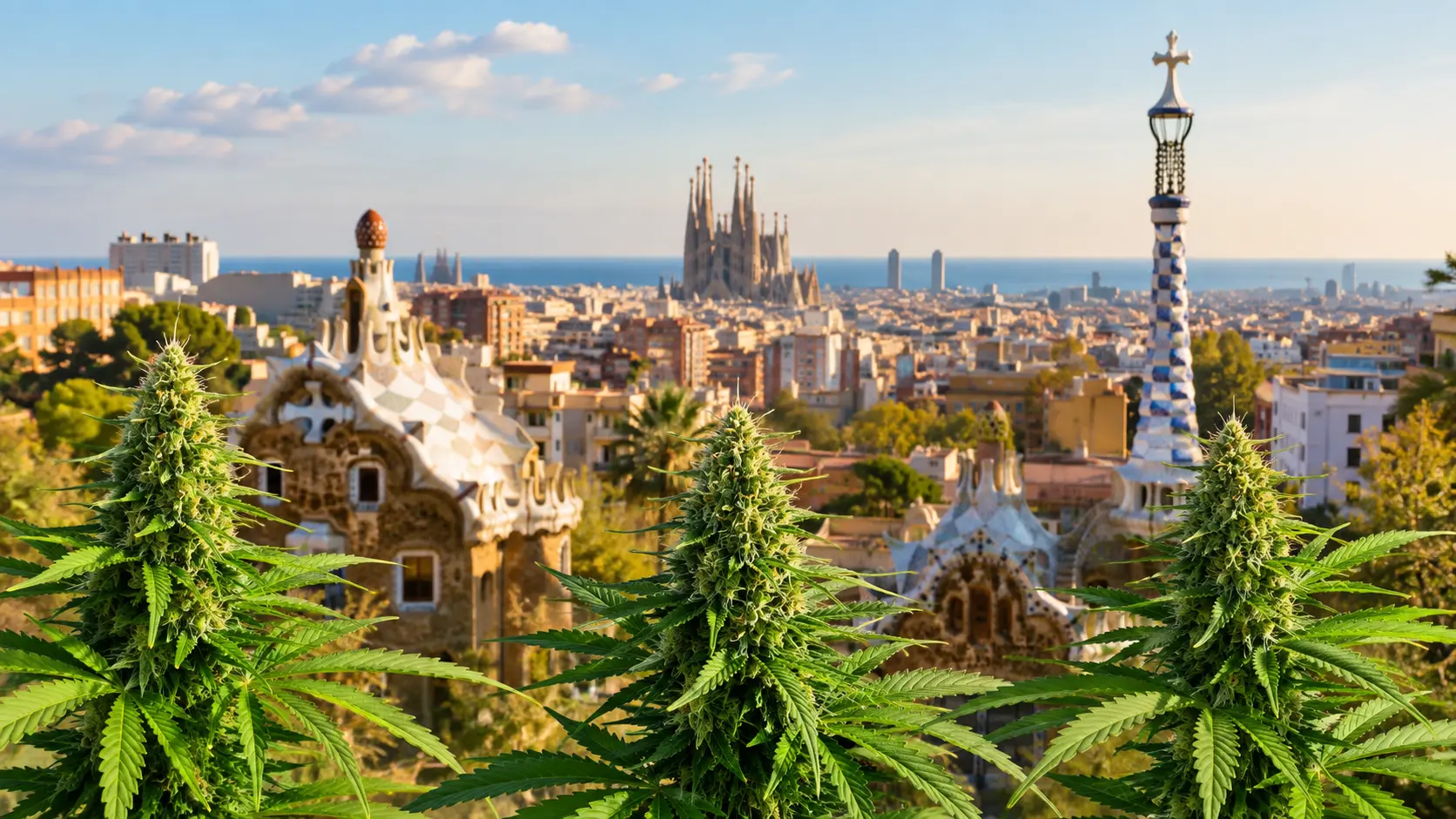
Is Weed Legal in Barcelona in 2026?
No. Recreational cannabis is not fully legal in Barcelona or Spain.
The confusion comes from the fact that Spanish law treats different cannabis-related situations differently.
Personal consumption or possession of small amounts intended for personal use is not automatically treated as a criminal offence when it takes place in a genuinely private context. Public possession or consumption, however, can lead to administrative sanctions. Selling, trafficking, cultivating or otherwise facilitating illegal drug consumption can fall under criminal law depending on the circumstances.
Spain’s Citizen Security Law classifies illicit possession or consumption of drugs in public places, public establishments or public transport as a serious administrative offence.
Fines for serious offences can range from €601 to €30,000, depending on the circumstances and sanctioning rules.
For the complete legal breakdown, including public possession, fines, private use, social clubs and medical cannabis, read: Is Weed Legal in Barcelona in 2026? Laws, Fines & Rules
What Are Cannabis Social Clubs in Barcelona?
Cannabis social clubs are private membership associations rather than public recreational cannabis shops.
Their existence is one of the main reasons Barcelona became internationally associated with cannabis culture, but describing them simply as “legal weed shops” would be inaccurate.
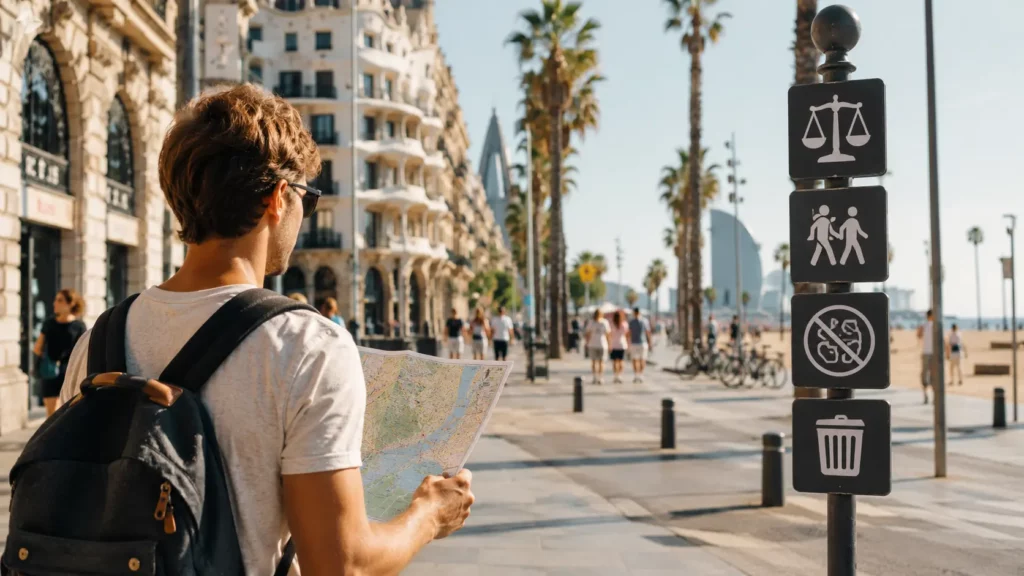
Cannabis social clubs in Barcelona are private membership associations, not public recreational cannabis shops.
Catalonia adopted Law 13/2017 in an attempt to regulate cannabis consumer associations. Spain’s Constitutional Court later declared that law unconstitutional and void because key parts entered areas reserved for national legislation.
Spanish Supreme Court decisions have also established that organized, institutionalized cultivation and distribution involving large groups can fall within Article 368 of the Criminal Code rather than qualifying automatically as non-punishable shared consumption.
Can Tourists Join Cannabis Clubs in Barcelona?
There is no general Spanish law giving tourists an automatic legal right to join a cannabis social club.
Cannabis associations are private organizations, so membership criteria can vary. A person’s status as a tourist does not create a special exemption from Spanish cannabis laws.
More importantly, becoming a member should never be interpreted as permission to:
- carry cannabis freely in public;
- smoke in streets, beaches or parks;
- purchase cannabis from street sellers;
- treat a private association as a licensed public dispensary.
For a separate informational explanation of membership policies and association rules: How to Join a Cannabis Club in Barcelona in 2026: The Ultimate Guide
Is There a Legal Weed Shop in Barcelona?
Barcelona does not have a legal recreational cannabis retail system comparable with licensed dispensaries in Canada or some U.S. jurisdictions.
Terms such as:
weed shop Barcelona
Barcelona dispensary
weed café Barcelona
can therefore be misleading.
Street cannabis sales are illegal, while cannabis associations operate under a fundamentally different private-association model.
Spain’s Criminal Code penalizes trafficking and activities that promote, facilitate or favour illegal drug consumption.
Why Is Barcelona So Closely Associated With Cannabis?
Barcelona’s reputation developed from a combination of private cannabis associations, international cannabis culture, events and Spain’s distinction between private and public conduct.
This made the city highly visible internationally even though recreational cannabis was never fully legalized.
The important distinction is:
cannabis culture ≠ cannabis legalization.
Visitors sometimes encounter websites describing Barcelona as “weed legal,” “420 friendly” or “the new Amsterdam.” Those descriptions can oversimplify Spanish law.
Barcelona has a distinctive cannabis culture, but it exists within national criminal law, public-possession rules, municipal regulation and court decisions.
For the travel-specific side of the subject: Cannabis Tourism in Barcelona: What Travelers Need to Know Before Joining a Cannabis Club
Weed in Barcelona vs Amsterdam: Is It the Same?
No.
Barcelona and Amsterdam developed very different approaches to cannabis.
Amsterdam is associated with the Dutch coffeeshop tolerance model. Barcelona became known instead for private cannabis associations.
That difference affects visibility, access, regulation and the legal status of cannabis-related activities.
A visitor should therefore never assume:
“Barcelona cannabis club = Amsterdam coffeeshop.”
They are different models operating under different national laws.
For the complete comparison: Barcelona vs Amsterdam: Best Cannabis Tourism City in Europe
What Do Indica, Sativa and Hybrid Mean?
Another common part of conversations about weed in Barcelona is the use of the labels Indica, Sativa and Hybrid.
Traditionally:
Indica has been associated with shorter, bushier plants and relaxing effects.
Sativa has been associated with taller plants and more stimulating effects.
Hybrid describes cannabis bred from different lineages and is often used for plants that combine characteristics associated with both categories.
However, modern research shows that these labels are far less precise than popular cannabis culture often suggests.
Genetic studies have found that samples marketed as Sativa and Indica do not separate neatly according to their labels. Chemical characteristics such as cannabinoid and terpene profiles can provide more meaningful information than the traditional category alone.
We have moved the complete educational guide to its own page: Indica vs Sativa vs Hybrid: Understanding Cannabis Strains in Barcelona
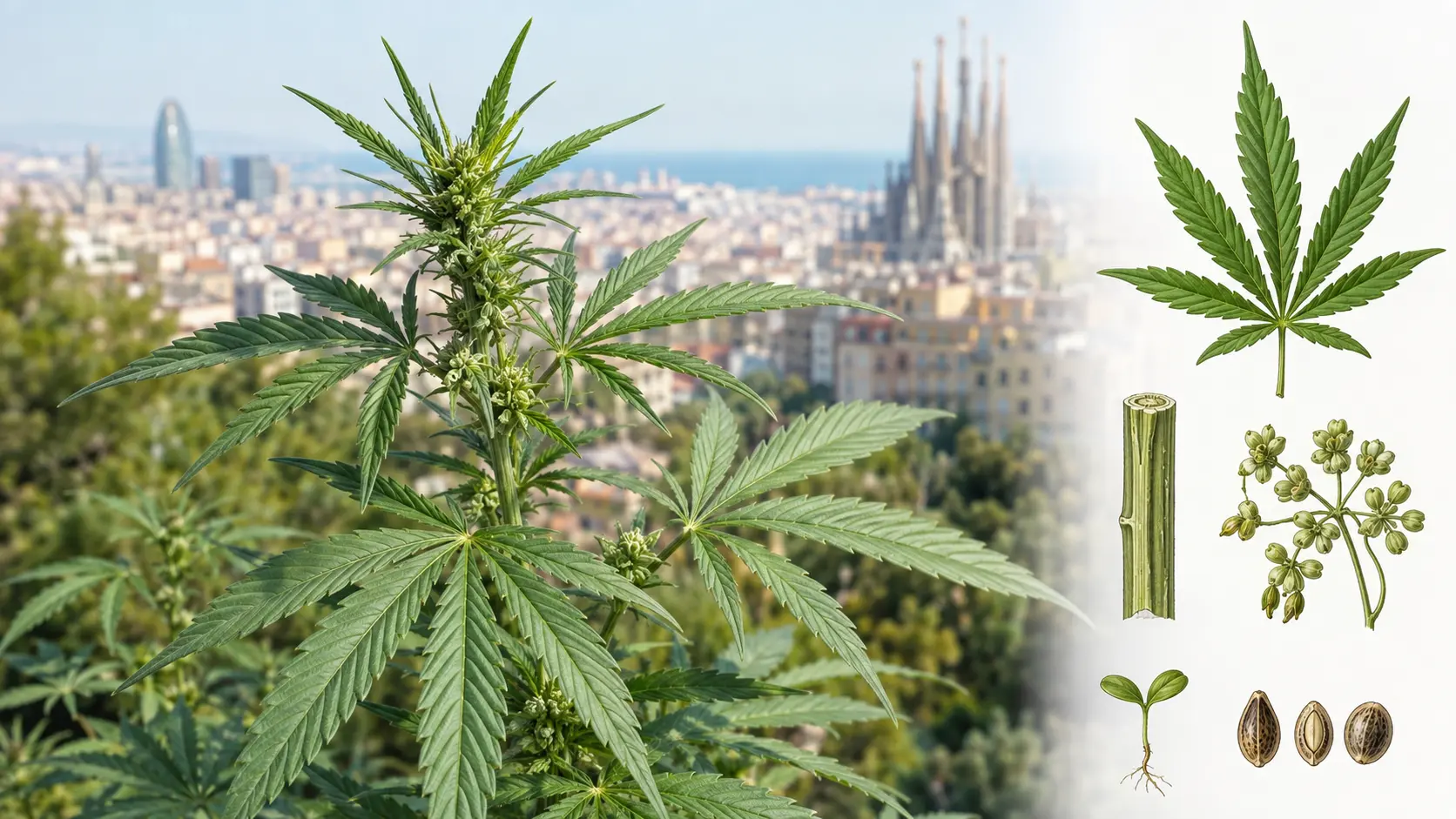
THC, CBD and Terpenes Matter More Than a Simple Label
Cannabis contains hundreds of chemical compounds.
Among the best known are:
THC (delta-9-tetrahydrocannabinol) — the principal cannabinoid associated with psychoactive effects.
CBD (cannabidiol) — another major cannabinoid with a different pharmacological profile.
Terpenes — aromatic compounds that contribute to smell and flavour and vary among cannabis varieties.
The Catalan public-health service notes that cannabinoid concentrations can vary according to the plant part, variety and harvesting conditions.
This is one reason why a simple label such as “Indica” or “Sativa” cannot reliably tell someone exactly what effects a particular cannabis product will produce.
Cannabis and Health: What Should People Know?
Cannabis is not risk-free.
Effects vary according to the individual, dose, cannabinoid composition, method of use and other factors.
Catalonia’s Canal Salut lists possible effects and risks including changes in attention, coordination, short-term memory and reaction time. Cannabis can also produce anxiety, panic or paranoid symptoms in some people, and its effects can increase accident risk when driving or operating machinery.
Smoking also exposes the respiratory system to combustion products; risks may increase when cannabis is combined with tobacco.
SmokeSignals provides cannabis information for educational and harm-reduction purposes. We do not encourage cannabis use or illegal activity.
For first-time and safety-oriented information: Smoking weed for the first time
What Visitors Commonly Get Wrong About Weed in Barcelona
Barcelona’s reputation creates several recurring misconceptions.
“Weed is legal in Barcelona.”
Not fully. Private personal conduct is treated differently from public possession and commercial supply.
“Cannabis clubs are legal dispensaries.”
No. They are private associations operating in a legally complex framework.
“Tourists have a right to join.”
No general legal right exists.
“If I am a club member, I can carry cannabis outside.”
Membership does not exempt anyone from public-possession rules.
“Barcelona works like Amsterdam.”
No. The models and legal frameworks are different.
“Indica always relaxes you and Sativa always gives energy.”
Scientific evidence does not support using those labels as reliable predictors of effects.
This is the kind of concise misconception block that works particularly well for Google snippets and AI Search, because each statement directly answers a common query.
Weed in Barcelona FAQ
Is weed legal in Barcelona in 2026?
No. Recreational cannabis is not fully legal in Barcelona. Spanish law distinguishes between private personal conduct, public possession or consumption and activities such as supply or trafficking. Public possession and consumption can result in administrative fines.
Can you smoke weed on the beach in Barcelona?
No. Beaches are public spaces, so Spain’s rules against illicit public possession and consumption apply.
Can you smoke weed in the streets of Barcelona?
No. Public cannabis consumption can result in confiscation and administrative sanctions.
Are cannabis clubs legal in Barcelona?
There is no simple yes-or-no answer. Cannabis associations exist in Barcelona, but they are not licensed recreational cannabis shops. The Catalan law intended to regulate cannabis consumer associations was annulled in 2018, and Spanish courts have placed important limits on organized cultivation and distribution.
Can tourists join a cannabis club in Barcelona?
Tourists do not have an automatic legal right to membership. Cannabis clubs are private associations and their membership policies may differ.
Can you buy weed from street sellers in Barcelona?
No. Street cannabis sales are illegal. Spain’s Criminal Code criminalizes trafficking and activities that facilitate illegal drug consumption.
Is Barcelona like Amsterdam for cannabis?
No. Amsterdam is associated with a coffeeshop tolerance system, while Barcelona developed a private-association model. The two legal frameworks are different.
What is the difference between Indica, Sativa and Hybrid?
These are traditional cannabis labels, but modern genetic and chemical research shows that they do not reliably capture the full differences between cannabis varieties. Cannabinoid and terpene profiles can provide more useful information.
Can cannabis affect driving?
Yes. Cannabis can impair attention, coordination and reaction time. Driving after cannabis use can increase accident risk.
Weed in Barcelona: The Essential Takeaway
Barcelona has a visible cannabis culture, but that should not be confused with full legalization.
The clearest way to understand weed in Barcelona in 2026 is to remember four distinctions:
- Private personal use is treated differently from public possession or consumption.
- Public cannabis possession and consumption can lead to fines.
- Cannabis social clubs are private associations, not licensed recreational shops.
- Selling, trafficking or facilitating illegal supply can carry criminal consequences.
Barcelona’s cannabis scene is therefore best understood through law, private associations, culture and harm reduction — not through the assumption that cannabis is simply legal.
For detailed answers, continue with the relevant specialist guide rather than relying on a single broad overview.
Disclaimer
This article is provided for general educational and informational purposes only. It does not constitute legal or medical advice. Cannabis laws, court decisions, regulations and enforcement practices can change. Always consult current official information or a qualified professional when legal or medical advice is required.