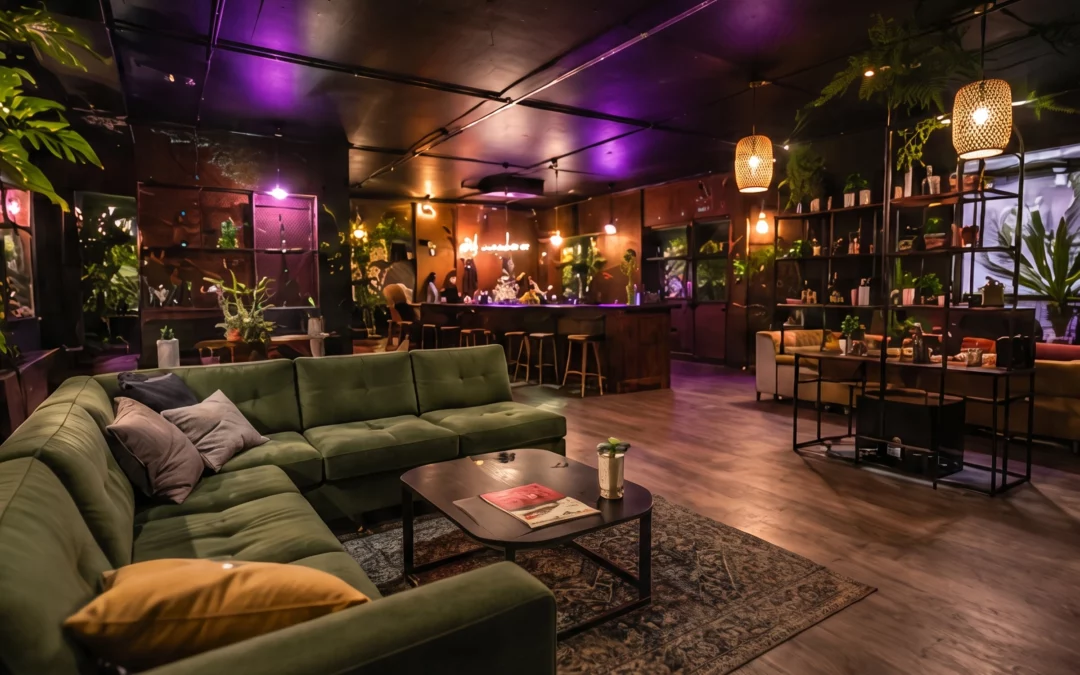
arcelona’s cannabis social clubs are often misunderstood. They are not the same as cannabis shops, licensed dispensaries or Amsterdam-style coffee shops. They are generally structured as private membership associations, with access governed by the association’s statutes and internal rules.
Understanding this distinction is essential because Spain has not created a general recreational cannabis retail system, and forming or registering an association does not automatically legalize every cannabis-related activity carried out by it.
Quick answer: Cannabis clubs in Barcelona generally operate through a private association and membership model rather than an open retail model. Members are subject to the association’s internal rules, while Spanish criminal and administrative law continues to apply to cannabis-related activities.
For a broader overview of the subject, see Weed in Barcelona in 2026.
What Is a Cannabis Social Club?
A cannabis social club is commonly organized as a private association with members, rather than as a shop open to the general public.
This distinction affects the way the organization works. A person entering a commercial shop is a customer. A person belonging to an association has a membership relationship with that organization and is subject to its statutes, admission criteria and internal rules.
However, the association structure itself should not be confused with a special cannabis licence. Spain does not have a general licensing system that turns private associations into recreational cannabis retailers.

How Does the Private Association Model Work?
The basic idea is that the organization exists as an association rather than as an ordinary retail business.
In practice, this usually means several organizational elements are involved:
- membership rather than unrestricted public access;
- statutes or internal rules governing the association;
- defined rights and responsibilities for members;
- administration of the association and its premises;
- membership contributions or fees in some associations;
- rules concerning privacy, behaviour and use of the premises.
The exact structure varies from one association to another.
This is one reason why it is misleading to describe every cannabis club in Barcelona as operating under one uniform set of cannabis-club rules.
What Does Membership Mean?
Membership is one of the main characteristics separating a private association from an ordinary public-facing business.
It is generally personal rather than transferable, and the association can establish admission requirements and internal rules through its statutes and procedures.
Membership should not be presented as simply buying access to a cannabis venue. Nor does becoming a member create a general legal right to obtain, possess or consume cannabis.
The exact admission process belongs to a different search intent. See How to Join a Cannabis Club in Barcelona for our separate informational guide to membership requirements and procedures.
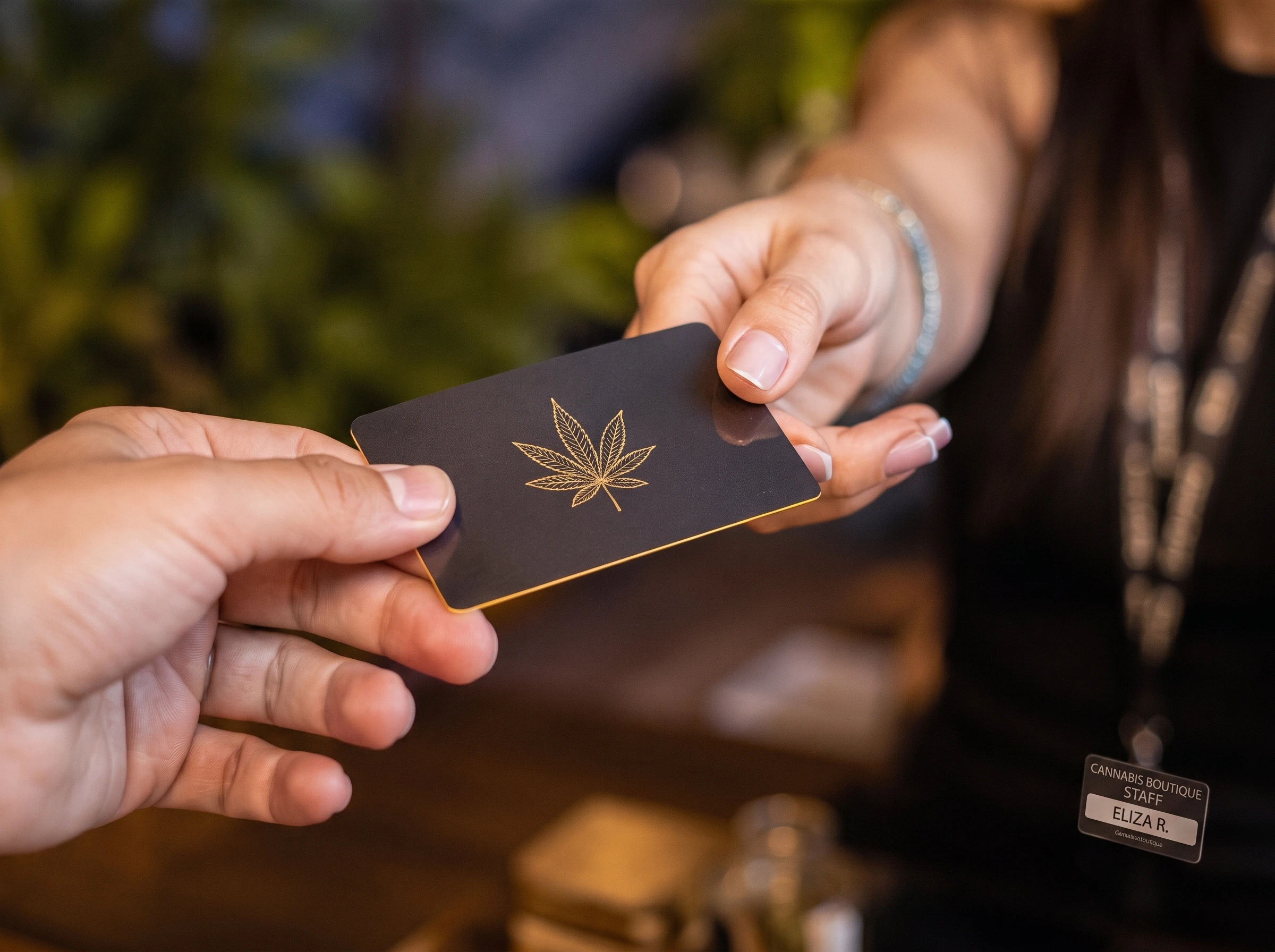
How Are Cannabis Clubs Different From Cannabis Shops?
Cannabis social clubs in Barcelona should not be described as recreational dispensaries.
| Private cannabis association model | Retail cannabis shop model |
|---|---|
| Membership-based | Customer-based |
| Private association | Commercial retailer |
| Internal statutes and rules | Retail terms and commercial rules |
| Not generally open as a cannabis shop to the public | Open to eligible customers |
| No general Spanish recreational cannabis retail licence | Operates under a specific retail framework where such a system exists |
The distinction matters because language such as “buy cannabis at a club” can wrongly suggest that Barcelona has a licensed recreational cannabis market.
It does not.
Who Sets the Rules Inside a Cannabis Club?
Private associations normally have their own statutes and internal rules.
These may govern matters such as access to the premises, identification, member conduct, privacy, guests, photography, opening procedures and other aspects of association life.
This means two cannabis social clubs in Barcelona do not necessarily operate in exactly the same way.
House rules, however, cannot override Spanish criminal or administrative law. An association cannot make conduct lawful simply by permitting it internally.
Are Cannabis Clubs Legal in Barcelona?
The most accurate answer is that the legal position is more complex than simply “legal” or “illegal.”
Cannabis itself has not been fully legalized for recreational use in Spain. Private personal use is treated differently from trafficking or public possession and consumption, but that distinction does not create a general legal cannabis market. Generalitat de Catalunya guidance states that possession or consumption of small quantities intended for personal use is not in itself a criminal offence, while consumption or illicit possession in public places is prohibited and can lead to administrative sanctions.
The Spanish Criminal Code also penalizes cultivation, trafficking and conduct that promotes, facilitates or favours illegal drug consumption under Article 368.
For this reason, describing a club simply as a “legal cannabis business” is inaccurate.
For the full legal explanation, read Is Weed Legal in Barcelona in 2026?
What Happened to Catalonia’s Cannabis Club Law?
Catalonia adopted Law 13/2017 concerning cannabis consumer associations.
However, Spain’s Constitutional Court later declared that law unconstitutional and void. The court concluded that the autonomous law entered areas governed by national criminal legislation.
Therefore, it is misleading to say that Barcelona cannabis clubs currently operate under a special Catalan law that broadly legalizes or licenses their cannabis-related activities.
Private associations continue to exist, but the relevant legal framework includes national criminal law, administrative rules, association law and applicable local requirements.
Why Have Spanish Courts Examined Cannabis Clubs?
Spanish courts have considered several cases involving cannabis associations.
The Supreme Court has drawn an important distinction between narrowly defined situations of shared private consumption and organized structures that distribute cannabis to large or open-ended groups.
In one case involving an association with about 290 members, the Supreme Court held that organized and persistent cultivation and distribution fell within Article 368 of the Criminal Code. In another Barcelona case involving about 2,300 members, the Court concluded that the scale of the organization went beyond the limits associated with non-punishable shared consumption.
This is why the existence of an association cannot, by itself, be treated as proof that every activity taking place within it is lawful.
What Is the Difference Between Private and Public Space?
The private/public distinction is important in Spanish cannabis law, but it is often oversimplified.
Public consumption or illicit possession of drugs is a serious administrative offence under Spain’s citizen-security rules. Generalitat guidance states that sanctions can range from €601 to €30,000, depending on the circumstances.
At the same time, being in a private space does not automatically make every cannabis-related activity legal.
The better way to understand the distinction is:
private setting ≠ automatic legalization
and
public possession or consumption can create additional administrative consequences.
Can Tourists Become Members?
Being a tourist does not create a special exemption from Spanish cannabis law or an automatic right to join a private association.
Individual associations can have different membership criteria, and eligibility should not be assumed simply because someone is visiting Barcelona.
For the visitor-specific context, see Cannabis Tourism in Barcelona 2026.
For membership information specifically, see How to Join a Cannabis Club in Barcelona.
That is all we need to say here. We deliberately do not turn this article into another tourism or joining guide.
Cannabis Clubs and Amsterdam Coffee Shops Are Not the Same System
Barcelona’s private-association model should not be treated as another version of Amsterdam’s coffee-shop system.
They developed under different legal frameworks and use different organizational models.
The important distinction for this article is simple:
Barcelona → private association model
Amsterdam → different public-facing coffee-shop framework
For the detailed comparison, see Barcelona vs Amsterdam: Cannabis Tourism.
Common Misconceptions About How Cannabis Clubs Work
“A registered association is automatically a legal cannabis business.”
No. Registration as an association does not create a general licence to sell or distribute recreational cannabis.
“Membership is the same as becoming a customer.”
No. The organizational concept is membership in a private association, not ordinary retail access.
“Anything that happens inside a private club is legal.”
No. Private location matters, but national criminal and administrative law still applies.
“Barcelona has legal recreational cannabis shops.”
Spain does not have a general recreational cannabis retail framework comparable to jurisdictions with licensed dispensaries.
“Tourists automatically have a right to join.”
No. Membership policies vary, and tourist status does not create a legal entitlement to association membership.
Frequently Asked Questions
How do cannabis clubs work in Barcelona?
Cannabis clubs are generally organized as private membership associations rather than open recreational cannabis shops. Their operation is governed by association structures, internal rules and the wider Spanish legal framework.
What is a cannabis social club?
It is a private association organized around membership rather than ordinary public retail access. The exact structure and internal rules can differ between associations.
Are cannabis clubs legal in Barcelona?
There is no simple blanket answer. Private associations can legally exist, but this does not automatically legalize all cannabis-related activity carried out through them. Spanish criminal, administrative and other applicable laws remain relevant.
Are cannabis clubs licensed dispensaries?
No. Barcelona does not have a general recreational cannabis dispensary licensing system comparable to legal retail markets in some other jurisdictions.
How does cannabis club membership work?
Membership creates a relationship between a person and a private association under its statutes and internal rules. Requirements vary between associations. Membership should not be interpreted as a general legal right to cannabis.
Can tourists join cannabis clubs in Barcelona?
There is no automatic legal right for tourists to join. Individual associations may have their own admission policies and requirements.
Is cannabis legal because it is inside a private club?
No. A private location does not automatically legalize every activity involving cannabis. The circumstances and applicable Spanish law still matter.
Can cannabis be carried or consumed in public?
Public consumption or illicit possession can lead to administrative sanctions. Spanish and Catalan official guidance treats public consumption and possession differently from private personal-use situations.
The Essential Takeaway
Cannabis clubs in Barcelona are best understood as private membership associations, not recreational cannabis shops.
Their existence reflects a particular association model, but this should not be confused with full cannabis legalization or a licensed retail system.
The clearest way to understand the subject is to separate four different questions:
How clubs work → this guide
What the law says → Is Weed Legal in Barcelona
How membership works → How to Join a Cannabis Club
What visitors should know → Cannabis Tourism in Barcelona
This separation is useful not only for readers but also for preventing different SmokeSignals guides from competing for the same search intent.
Related SmokeSignals Guides
Use these internal links at the bottom:
- Weed in Barcelona in 2026
- Is Weed Legal in Barcelona in 2026?
- How to Join a Cannabis Club in Barcelona
- Cannabis Tourism in Barcelona 2026
- Barcelona vs Amsterdam
Official Sources
Spanish Criminal Code, Article 368 — Boletín Oficial del Estado
Tribunal Constitucional — Judgment 100/2018 concerning Catalan Law 13/2017
Consejo General del Poder Judicial / Tribunal Supremo — cannabis association case law
Canal Salut, Generalitat de Catalunya — cannabis and drug-law information
Disclaimer: This article is for general informational and educational purposes only and is not legal or medical advice. Cannabis-related laws and their application can depend on the circumstances. For advice about a specific situation, consult a qualified legal professional.